Behavior Management · Franklin Park, NJ
Positive Behavior Support for Adults with I/DD in Franklin Park, NJ
At Folak Adult Social Day Program, behavior support starts with understanding why a behavior happens, then teaches the skills that meet the same need so adults with intellectual and developmental disabilities take part more fully.
Definition
What is behavior management in a NJ day program?
Behavior management at Folak's Adult Social Day Program is positive behavioral support: staff identify the reason behind a behavior, teach skills that meet the same need, and reduce barriers to participation, guided by each person's plan.
What does behavior management include at Folak's day program?
Behavior management includes functional understanding of each behavior, teaching of replacement skills, environmental adjustments that remove triggers, and consistent, respectful responses, all delivered within the participant's individualized program rather than through punishment.
Positive behavioral support centers the program on one question: what need does a behavior meet? Staff observe patterns, identify the function behind a behavior, and teach a more effective skill that meets the same need. AAIDD describes this approach as positive behavior support, an evidence-based, non-punitive practice.
Reducing barriers to participation completes the picture. Staff adjust routines, the environment, and communication so triggers fade and success becomes easier, in line with the community-integration expectations of CMS's HCBS Settings Rule and New Jersey DDD policy.
Who does positive behavior support help?
Positive behavior support helps adults 21 and older with intellectual and developmental disabilities whose behaviors interfere with learning, relationships, safety, or community participation, including people served through New Jersey DDD's Supports Program and Community Care Program.
Adults with autism, intellectual disability, cerebral palsy, and related conditions benefit when behaviors interfere with learning, friendships, or safety. The Arc recognizes that behavior often communicates an unmet need, and support that listens to that message respects the person.
People enrolled through New Jersey DDD — in either the Supports Program or the Community Care Program — receive this support as part of their day habilitation at Folak, matched to the goals in their individual plan.
How does positive behavior support work day to day?
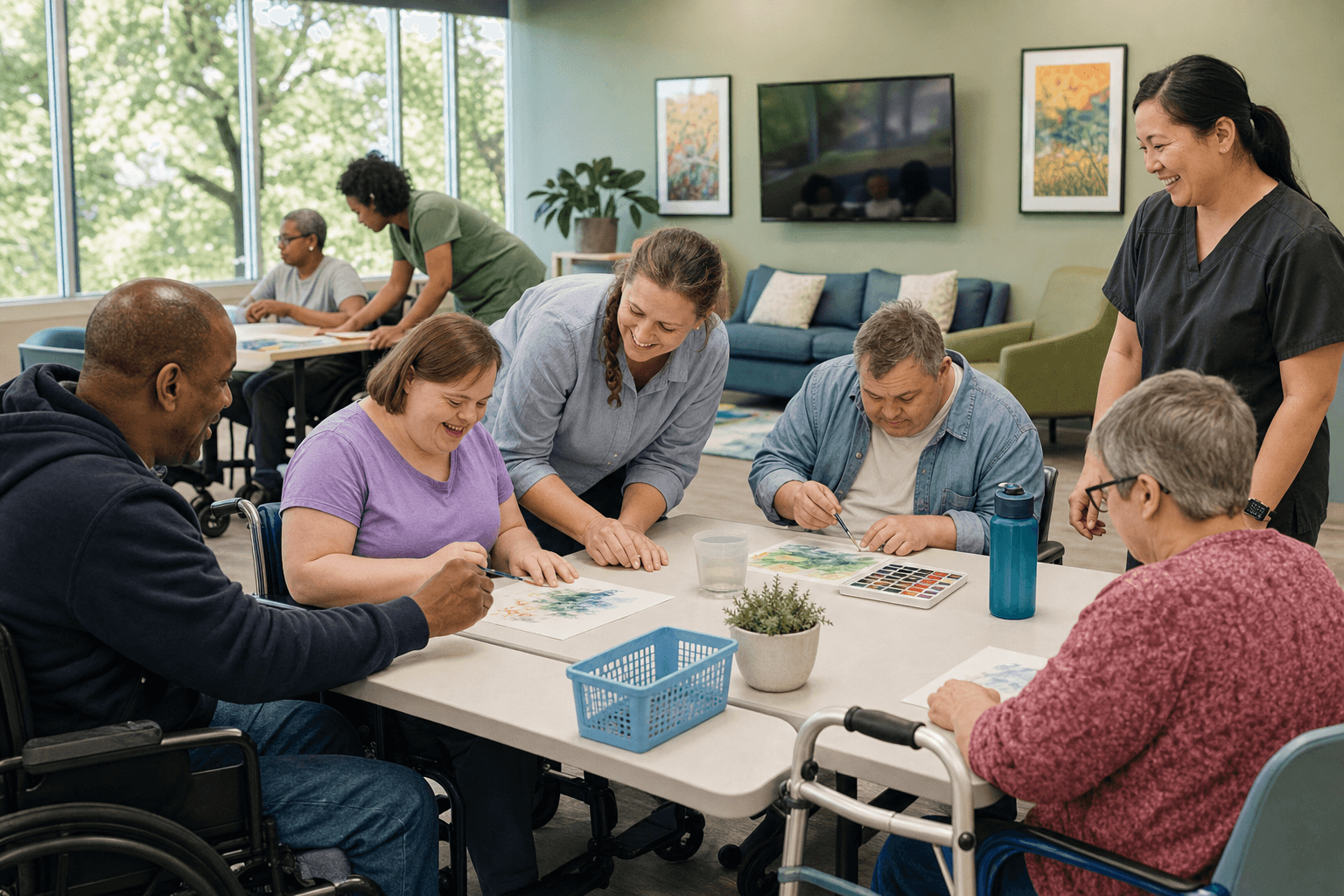
Day to day, positive behavior support works through observation, consistent routines, skill-building in real situations, and team coordination, so trained staff respond the same way and reinforce the new skills a person practices.
Consistency drives results. Trained direct support staff follow the same routines and respond to behavior the same way across the day, reinforcing the replacement skills a person practices in real situations such as group activities, mealtimes, and community outings.
Team coordination keeps the plan current. When a qualified clinician or the planning team develops a behavior support plan, Folak staff implement it, record how a person responds, and share that information with the Support Coordinator, as New Jersey DDD outlines for day services.
How does behavior management fit the ISP and funding?
Behavior management fits within each participant's Individualized Service Plan (ISP), which New Jersey DDD authorizes through the NJ CAT assessment and Medicaid funding, so support follows the goals and budget the planning team approves.
The ISP authorizes every service. New Jersey DDD funds supports through Medicaid Home and Community-Based Services, and the NJ CAT assessment sets a budget tier reflecting each person's level of need. Support that sits outside the ISP carries no authorization, so the planning team builds behavior goals into the plan.
Support Coordinators connect the pieces. A participant's independent Support Coordinator authorizes day habilitation, monitors health and safety, and revises the ISP as needs change. Folak delivers the daily support and documents progress toward the approved goals.
What do families experience with this approach?
Families experience clear communication, a non-punitive approach focused on dignity, and visible progress as their family member builds skills and takes part more fully in the program and community.
Clear, respectful communication anchors the experience. Families hear how their family member is doing, what skills the team is building, and how everyday routines support progress. Stephen Komninos' Law frames New Jersey DDD's expectation of open guardian communication, which Folak follows.
Dignity stays at the center. The approach avoids punishment and protects each person's rights and choices, consistent with CMS's HCBS Settings Rule. Families see progress measured in real participation: more engagement, stronger relationships, and steadier days.
What do families ask about behavior management?
Who qualifies for positive behavior support at Folak?
Adults 21 and older with intellectual and developmental disabilities enrolled in New Jersey DDD and attending the Adult Social Day Program qualify. Behavior support is woven into day habilitation for those whose behaviors affect participation or safety.
How is behavior management funded?
Behavior support is funded through New Jersey DDD using Medicaid Home and Community-Based Services. Each participant's ISP authorizes services within a budget set by the NJ CAT assessment, so authorized supports carry no direct cost to the family.
How does a family or Support Coordinator get started?
Getting started begins with a call to Folak at (732) 860-9104 or an email to folakhealthcarellc@gmail.com. The team arranges a visit, reviews the participant's ISP and any behavior support plan, and coordinates enrollment with the Support Coordinator.
What makes positive behavior support effective?
Effectiveness comes from understanding the reason behind a behavior, teaching a skill that meets the same need, and applying the approach consistently across staff. AAIDD identifies this evidence-based, non-punitive model as positive behavior support.
Does the program use punishment or restraint?
No. The program uses positive, non-punitive strategies focused on skills, dignity, and rights. Staff follow each person's plan and the community-integration and rights protections described in CMS's HCBS Settings Rule and New Jersey DDD policy.
How does Folak work with our clinical team and Support Coordinator?
Folak staff implement the behavior support plan a participant's clinician or team develops, document progress, and share updates with the Support Coordinator. This coordination keeps daily support aligned with the ISP and the family's goals.
What other services does Folak offer?
Day Habilitation
Structured daytime programming that builds daily-living, social, and self-care skills — promoting independence, routine, and meaningful engagement for adults with I/DD.
Individual Support
One-to-one assistance matched to each person's goals — support with daily routines, communication, and personal care, delivered with dignity and choice.
Prevocational Training
Work-readiness skill-building — task sequencing, soft skills, and work habits — that prepares individuals for volunteer roles and future employment.
Community-Based Support
Staff-supported access to the wider community — errands, recreation, volunteering, and local activities — that builds real-world skills and natural connections.
Community Inclusion
Opportunities to take part in community life — outings, social groups, and civic activities — that build belonging beyond the program walls.
Respite
Short-term, reliable relief care that gives family caregivers a break while their loved one stays safely supported and engaged.
Transportation
Reliable rides to and from the day program, community outings, and activities — so getting there is never a barrier. Vans are wheelchair-accessible.
How do you start adult day services in Franklin Park, NJ?
Start with a visit. Schedule a tour or call us, and our team walks you through the center, answers your questions, and sets up a simple intake assessment.